
Expert-reviewed by Dr. Kristyn VanDahm
Apr 14, 2026
When Do Kids Understand Seasons and Weather? And How High-Quality Shows Support Their Curiosity
There is a classic Peppa Pig episode called "Muddy Puddles" where Peppa and George desperately want to play outside after it rains.
They run out, find a massive puddle, and jump right in—making a joyful, muddy mess.
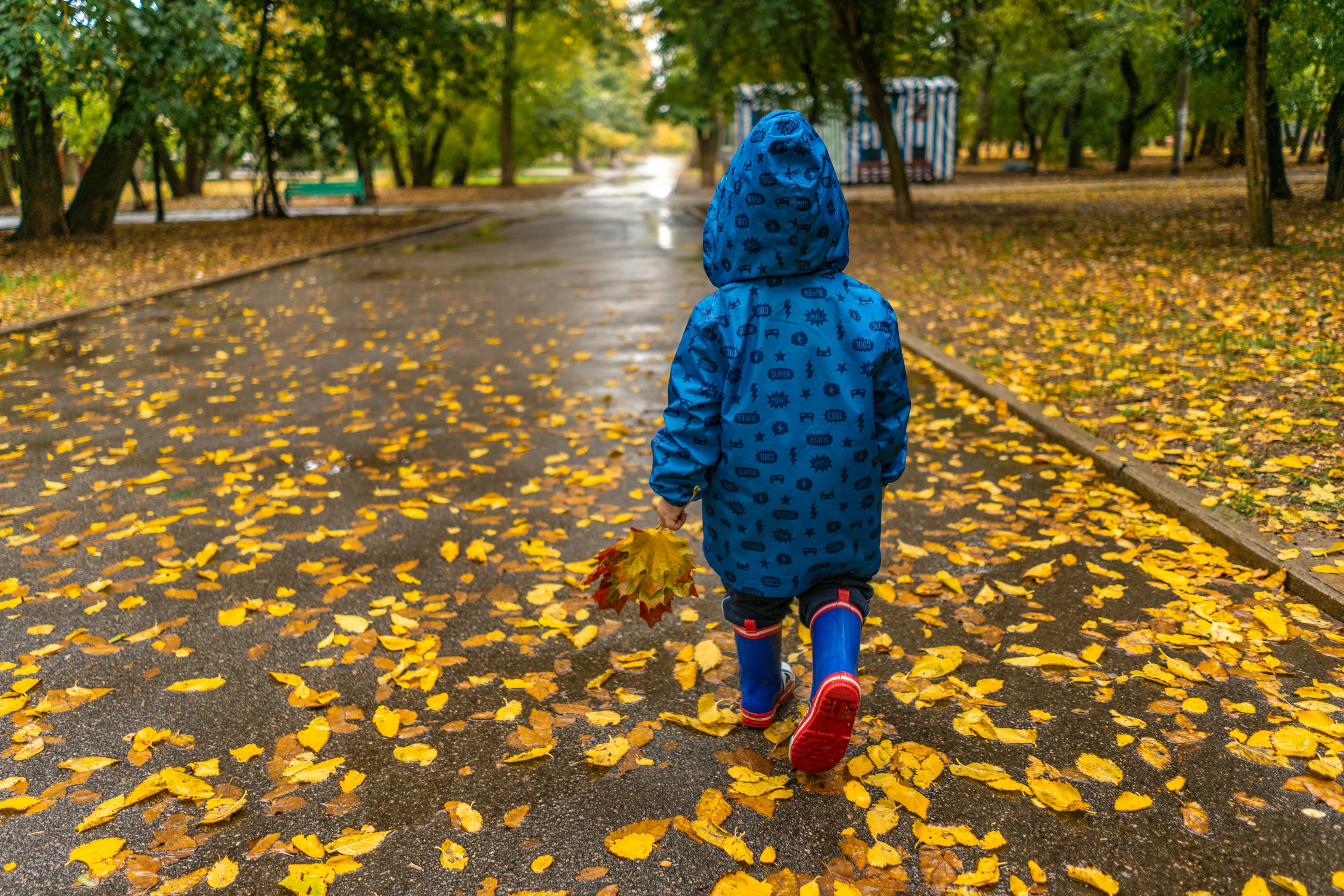
If you are a parent, you know the tension of this exact moment. Getting a toddler into a rain jacket, wrestling with winter coats, or dealing with the aftermath of a muddy puddle can feel chaotic and exhausting. But what looks like a laundry disaster to us is actually early scientific inquiry in action. Peppa is exploring cause-and-effect: I jump, the water splashes. Here is what most parents don't know: understanding the weather, the seasons, and nature isn't just an academic science lesson. It is deeply tied to your child's first hand experience with and within nature. Here is what child development research actually says about how environmental awareness builds from birth to age 6—and what it means for what you put on the screen.
How Early Does Environmental Awareness Start?
Science learning begins with sensory exploration, not formal instruction. Starting in infancy (0-12 months), babies begin noticing environmental changes in light, temperature, sound, and texture. They feel the wind on their skin, hear the sound of rain, and watch how you respond to these environmental shifts. Curiosity before mastery is the goal here. At this stage, your baby is absorbing the natural world through repeated, supported exposure, which contributes to building the foundation for later scientific reasoning and curiosity.
Why Toddlers Struggle with Seasonal Shifts (And Why That's Normal)
Between ages 1 and 3, toddlers explore weather through movement and cause-and-effect ("rain = wet," "sun = warm").But this is also the age where transitions—like the daylight saving time change, or suddenly having to wear a bulky winter coat—can cause major meltdowns. Changing seasons can be highly dysregulating for a toddler.
What the research found: Studies show that children in families with daily routines show lower stress levels, fewer behavioral challenges, and stronger emotional regulation (Selman & Dilworth‐Bart, 2024). Routines do not eliminate change; instead, they act as emotional anchors during unpredictable times of transition. You might not be able to prevent the meltdown, but you can offer a consistent, predictable routine to help them weather it.
When Do Kids Actually Understand Nature's Systems? (Ages 3-6)
Around ages 3 and 4, preschoolers begin identifying patterns and asking "why". They start to notice sequences (cold → warm, seed → plant) and begin comparing their experiences. Early science learning begins with this sensory exploration and shared attention, not formal instruction, and adult co-exploration is what strengthens their inquiry and persistence (Gopnik, 2012; Trundle & Saçkes, 2015). Children build their understanding of natural systems gradually across early childhood, moving from concrete experiences to abstract reasoning (Trundle & Saçkes, 2015). By kindergarten (ages 5-6), children can understand simple systems like weather patterns, predict outcomes, and participate in care-based activities like planting seeds. Research also highlights an incredible benefit to this exploration: time spent in nature is consistently associated with improved attention control, reduced stress markers, and better impulse regulation (Kuo et al., 2019).
Activities to Support Science Learning & Curiosity for Ages 0-6
You don't need a science lab to help your child explore the seasons. Everyday moments matter most:
- 0-12 months: Sensory weather exposure. Let them feel the sunlight or a gentle breeze, and simply name the environmental changes during walks.
- 1-2 years: Puddle play and weather walks. Let them explore the rain or puddles or go on walks and talk about the weather.
- 3-4 years: Start a simple weather chart on the fridge, track a plant's growth, or go on a nature scavenger hunt.
- 5-6 years: Try shadow tracking outside, do simple experiments (like melting an ice cube), or give them assigned care roles in a community garden.
Watch Together: Environmental Curiosity in Action
When you need a moment to breathe, kids shows can be a supportive tool to reinforces what your child is already learning outside. High-quality media, especially when watched together, helps children process the world around them.
Peppa Pig "Muddy Puddles"In this episode, Peppa and George explore the physical world after a rainstorm. This kind of content isn't optimized for addictive attention—it's optimized for growth, showing natural cause-and-effect reasoning.While watching, try asking:
- "What does it feel like to be outside today?"
- "What do you notice outside about the weather?"
- "Why do you think this change happened?"
Common Misconceptions About Kids and Change
Myth: Kids need full explanations about how the weather works.
Fact: Wonder comes first. Early science learning is grounded in sensory exploration and shared attention, not formal, academic instruction.
Myth: Adaptability comes naturally to kids.
Fact: It’s built through support and experience. Sudden changes in weather or daylight disrupt a child's internal clock. It is entirely normal for transitions to cause dysregulation. Children learn to adapt when adults provide routine that then becomes internalized (Selman & Dilworth‐Bart, 2024).
Myth: Nature learning is academic.
Fact:. Across hundreds of studies, time in nature is linked to improved attention, reduced stress, and better self-regulation. Research consistently points to nature fostering personal development including resilience, cooperation, and emotional connection, though much of this evidence is qualitative rather than experimental (Kuo et al., 2019).
The Bottom Line
A child's understanding of seasons, weather, and change develops step by step: from sensory feeling, to first hand experiences like jumping in puddles, to understanding natural systems. They are learning from the outdoors, from you, and from what they watch. Most "kids content" today is noisy, overstimulating, and disconnected from the real world. Maka Kids replaces that chaos with curated calm. By choosing kids media you can trust—shows that respect natural rhythms and child development—you can give your child a safe place to explore, and give yourself the guilt-free break you deserve.
References:
Gopnik, A. (2012). Scientific thinking in young children: Theoretical advances, empirical research, and policy implications. Psychological Science, 23(6), 1623–1627.
Kuo, M., Barnes, M., & Jordan, C. (2019). Do experiences with nature promote learning? Converging evidence of a cause-and-effect relationship. Frontiers in Psychology, 10, 305.
Selman, S. B., & Dilworth‐Bart, J. E. (2024). Routines and child development: A systematic review. Journal of Family Theory & Review, 16(2), 272-328.
Trundle, K. C., & Saçkes, M. (2015). Research in early childhood science education. Early Childhood Research Quarterly, 30(Part A), 1–4.